United States
 Canada
Most vehicle mistakes are not about seats. They are about bags. A car that holds four passengers on paper can hold four people or two people and a mountain of suitcases, but not both. This guide explains how luggage space works across the eight vehicle classes we book, so you can choose the right one before you reach the curb.
The numbers below are rough guides, not guarantees, since models vary and operators may send a similar vehicle. For passenger counts, see the limo vehicle sizes guide, and for the fleet itself, see our fleet section.
Bags come in sizes
When you plan luggage, count by size rather than by number. A carry-on or backpack is small. A medium suitcase is typical for a week away. A large suitcase, the kind that fills the checked-bag allowance on a long trip, is the real space hog. Add bulky items such as skis, golf clubs, strollers, instrument cases and equipment cases, and the volume rises quickly. The outline of baggage types is a good reminder of how much variety exists.
Class by class
| Class | Seats | What it typically carries |
|---|---|---|
| First Class Sedan | 3 | Two large suitcases plus a few small bags, if only one or two people travel |
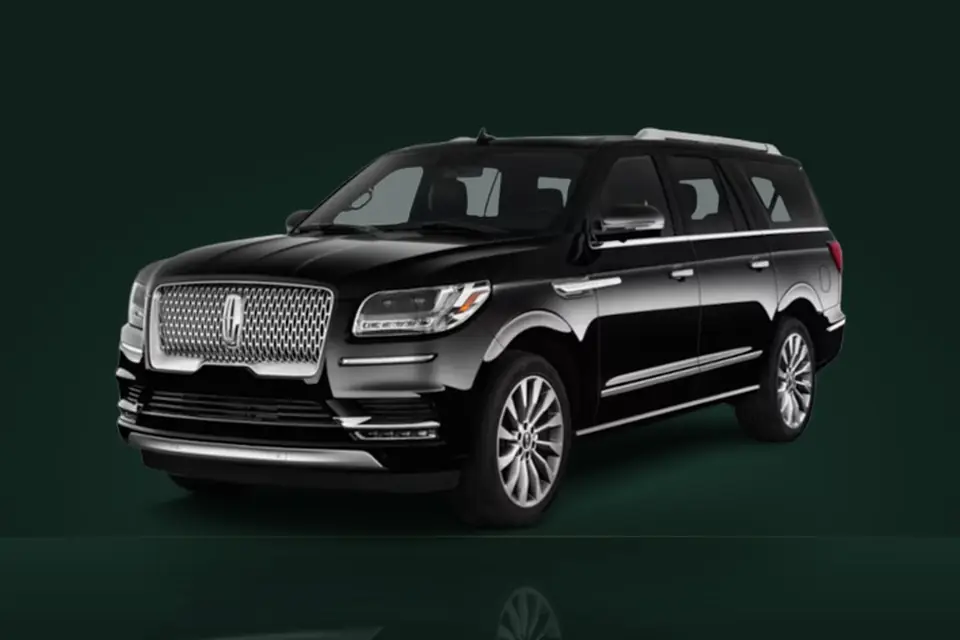
| Business SUV | 6 | Like the Luxury SUV: a few medium bags with every seat taken, many large bags with the third row folded |
| Luxury SUV | 6 | With all rows up, a few medium bags. With the third row folded, many large bags |
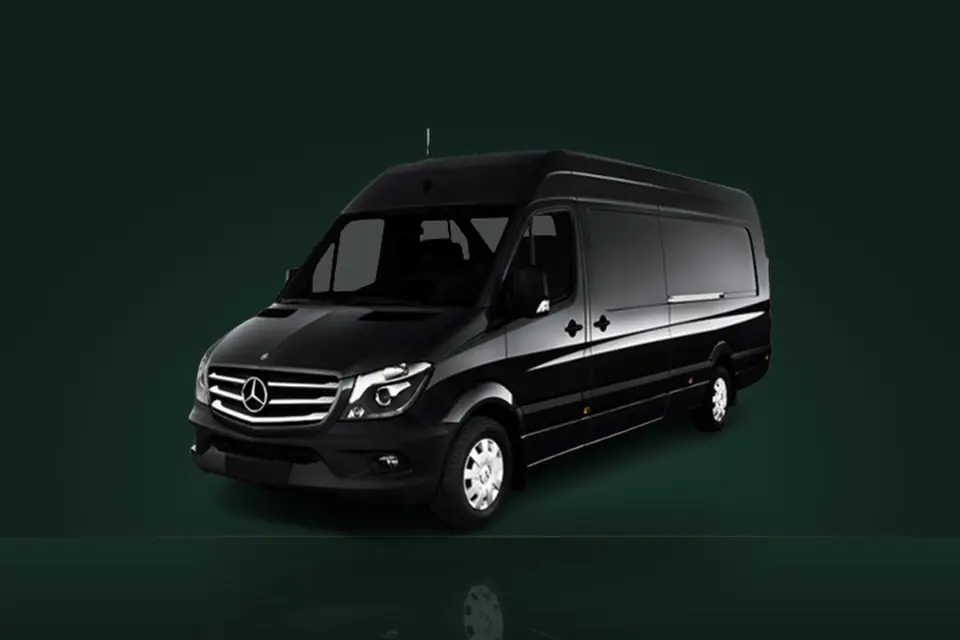
| Business Van | 6 | Generous space behind the rear seat, with a squared-off cargo area |
| Executive Sprinter | 12 to 14 | Large, but fills quickly if every seat is taken |
| Jet Sprinter | 7 | Room for checked bags, since the lounge seats only seven |
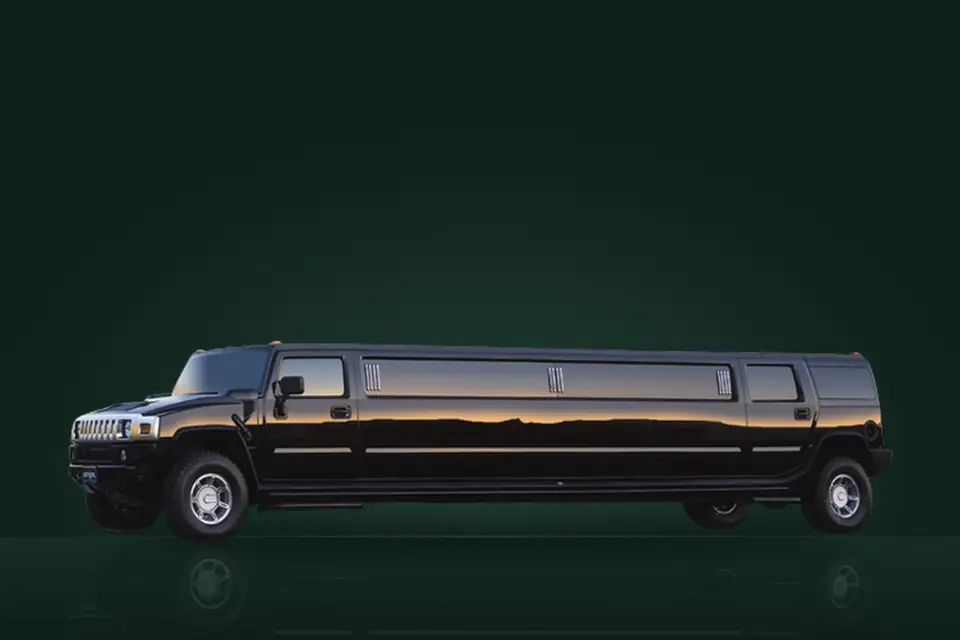
| Stretch Limousine | 8 to 10 | Small trunk, intended for people and small bags |
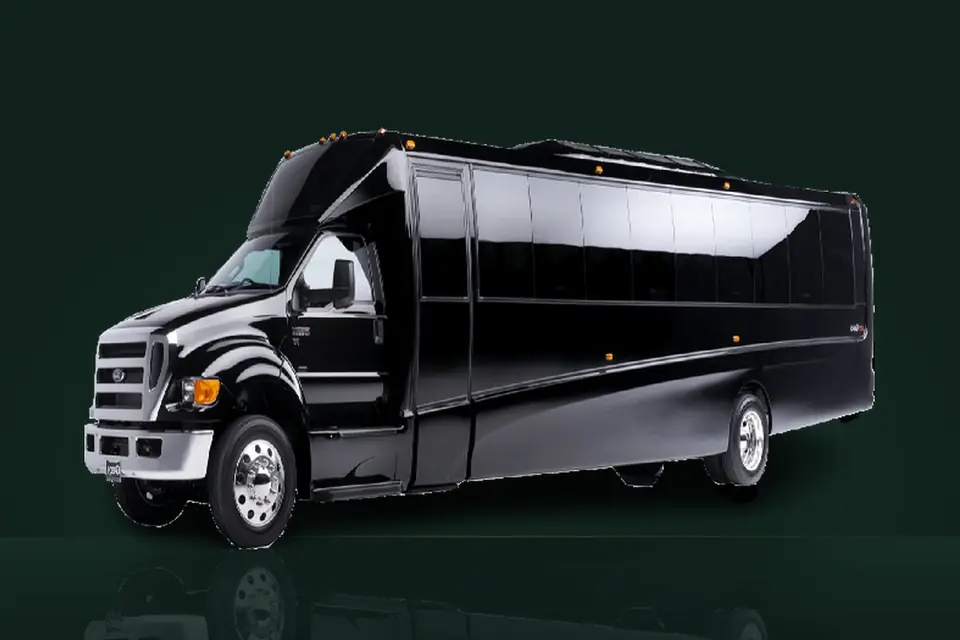
| Party Bus | 20 to 30 | Little or no luggage space, since the interior is the point |
These are directional estimates. Operators know their own vehicles, so ask for a specific answer when your luggage is unusual.
How seats change the math
Seats and bags compete for the same space. In a Luxury SUV, the third row is also the area where bags would sit, so a full load of six people leaves little room behind. The Mercedes V-Class is built with a long, flat floor, which helps when a group carries large cases, and our guide to the V-Class business van shows how. A Sprinter has room behind the last row, but a fully seated group of twelve to fourteen may still need a trailer or a second vehicle for large bags. Read Executive Sprinter vans for details.
Stretch limousines are a trap for luggage. They are long, but most of that length is the passenger cabin, and the trunk is small. A Party Bus is a similar story. Both classes are best for a trip with minimal bags, such as a night out or a short event, rather than an airport run with heavy luggage.
Special items
- Skis and snowboards: tell the operator the number and length. An SUV or van is usually better than a sedan. See ski trip transfers.
- Golf clubs: one bag per player. A group of four needs more room than four people suggest. See golf trips by chauffeur.
- Strollers and car seats: bring them folded, and read airport transfers with kids.
- Instrument or equipment cases: give dimensions in advance, and ask whether they will fit upright or flat.
A simple rule for choosing
Start with the number of people. Then count large suitcases and special items. If the total is more than the class carries comfortably, go up one class or add a second vehicle. For many groups, a Luxury SUV or Business Van is the safe choice when bag count is uncertain. Compare the options in sedan or SUV, and see the First Class Sedan guide for sedan trunk space. The maker of the V-Class describes the van at Wikipedia.
Tips for packing and loading
Soft bags are easier to fit than hard cases, because they can be squeezed into odd spaces. If you must bring hard cases, choose the same sizes so they stack, and carry fragile items in the cabin. Keep important items, such as medication, passports and chargers, in a small bag you hold on your lap. For multi-leg trips, remember that your bags will move from a plane to a car to a hotel, so label each one clearly.
Send photos or dimensions of unusual items to the operator, and ask whether a second vehicle or a trailer is a better answer than a larger class. For a large group, a luggage van that travels ahead of the passengers can solve the problem cheaply. The best plan is the one that avoids standing on a curb at midnight arguing about a golf bag, so decide early.
When your luggage plan is clear, review the fleet and book your car here.
Frequently asked questions
How do I know if my bags will fit?
Count large suitcases and special items, not just the number of passengers, and ask the operator about the specific vehicle.
Why is a stretch limousine bad for luggage?
Most of its length is the passenger cabin, and the trunk is small. It suits people and small bags.
Should I choose a van or an SUV for a family?
A Business Van has a long cargo area and six seats. A Luxury SUV is more flexible but loses cargo room when the third row is used.
Can I bring skis or golf clubs?
Yes, but tell the operator in advance so they can send a suitable vehicle.